Friday, January 4, 2008
Air pollution leads to Interior, northern deaths
(December 18, 2007)
Between 16 and 98 people a year die from fine particulate exposure in the B.C. Interior and North, according to a new study by doctors Catherine Elliott and Ray Copes.
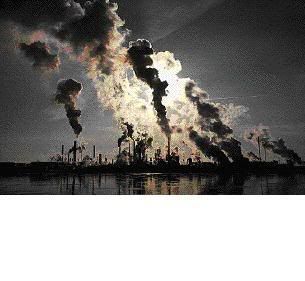
Fine particulate – particles 2.5 microns and smaller, called PM 2.5 – enters the air primarily as a by-product of combustion – gasoline and diesel engines, wood burning, industrial processes and other sources. The study found Prince George had the highest PM 2.5 levels in the province.
“Most of the mortalities [from PM 2.5 exposure] happen in the Interior and North, even though most of the population is in the Lower Mainland,” Elliott said. “We know that people die from short-term air pollution events. With exposure over the long term, the risk is much greater than over the short term.”
New long-term studies in the U.S. have tracked PM 2.5 exposure and mortality rates over an 18-20 year period, she said. Those studies have given doctors a much better understanding of what the long-term effects of PM 2.5 exposure are.
The study looked at PM 2.5 levels across the province and factored together a number of studies to create an average annual mortality rate of 61 in the North and Interior. Elliott said they methodology they used is the same used by the B.C. health officer, several European countries and the World Health Organization (WHO).
Air quality in Terrace and the Vancouver Airport were used as benchmarks to compare mortality rates in the North and Interior.
If all communities in the North and Interior had PM 2.5 levels equal to Terrace, there would have been approximately 263 fewer deaths from 2001 to 2005. If all communities had the same air quality as the Vancouver Airport, there would have been 127 fewer deaths.
Even with the best data, the 16 to 98 per year range, “represents the degree of uncertainty,” in the projections, Elliott said.
“Someone doesn’t come in and doctors say, ‘This person died of air pollution,’” she said. “The mortality that is most attributed is cardiovascular – heart attacks. Fine particulate gets into the arteries and causes inflammation.”
PM 2.5 can be absorbed into the bloodstream through the lungs, she explained.
The study makes a number of recommendations, Elliott said, and reducing the levels of PM 2.5 is number one.
Students' Feedback:
if a the short term effects of air pollution to our bodies are deadly what more can the long term effects do?

Aroma
Langhapin ang usok
Tuwing umaga’y maiinis
Basurang nabubulok
Abot langit ang bihis
Hindi ba naamoy, isang banta
Mundong may tanging aroma
The Firefly Protest
As a kid, I heard of a story,
About creatures of lighted glory
They thrived wherever there was clean air,
They flew about at nighttime with flair
I grew up and the story changed slowly,
Seeing these fireflies seemed less likely
With what the worsening air pollution
They moved farther and father from civilization
Now I hear of a completely different one,
Of how these beings are now gone
How they searched for a new paradise
Their reason I can easily surmise
Step out of your house, take a walk outside,
There you’ll find riskier things than ingesting formaldehyde
Breathe in sulphur, a deadly gas or two,
Discover just how badly it affects you.
The air that we inhale and breathe,
Is the very air that can kill
These fireflies, they’re telling us to follow their lead,
Telling us to act now, while there is hope still
If I may hope,
I wish we have not only found a way to cope
With the filth we let seep in the air
But we have done something about it, for that is only fair
Many years from now, if we act immediately, I know
The earth’s original beauty will once again show
Make the air worthy of fireflies again,
Make it as pristine as it was then.
Sayaw
Isang gabi lumapit ka
Humalik sa pisngi kong mapupula
Hindi malimot malamig mong halik
Sabay ang tugtog sa ating paligid
Saya’y umaapaw tuwing kapiling ka
Kasayaw ang paru-paro at iba pa
AIR is ♥
One thing we must repair,
Is the current situation of our air.
We have too much to worry about the oil underneath,
So clean up so that we don’t have to worry about what we breathe.
Air and Love
Taking care of our air
is like taking care of a relationship,
without air we would die,
without love, love would die.
Before we would all perish
let us start to cherish
and take care
of our air.
Usok
Hindi ka na ba naawa?
Sa bawat hithit mo ng sigarilyo
Sa bawat bukas mo ng makina ng auto mo
Madami ng namamatay na kaluluwa
Sige! Hawakan mo yang lighter
Buksan mo ang iyong tabako
Palayiban mo ang sinisiga mo
Paganahin mo ang pagbrika mo
Maawa ka sa mga tao
Sa mga taong makakasinghot nito
Kanser, Pneumonia at Hika
Tiyak makakadapo nito
Usok tiyak na nakamamatay!
Hindi lang sa sangkatauhan kundi pati na rin kalikasan
Simpleng paglanghap nito nagdudulot ng karamdaman
Dahil sa usok mo maraming madadamay.
Air Care
Open your eyes and be aware
How dirty and polluted is our air
Our basic need in order to live
So, let’s contribute what we can give
Burning and smoking are the main cause
Our pure and clean air we have lost
We are the reason of air pollution
And so, let’s contribute to make a solution
Let us help each other and do our part
Together we can make a new start
One community, one country and one nation
Preserving our earth for future generation
BISIKLETA.
Sa bawat kalye sa Pinas
makikita mo ang mga batang
nagkakasiyahang nag-uunahan
sakay ng bisikleta
bisikleta.
Isang laruang umuusad
dalawang gulong, o pwedeng tatlo o apat
nagbibigay ngiti
sa matanda at paslit
bisikleta.
Ito'y ano nga ba? ito ba'y isang laruan lamang?
o may iba pa itong saysay
sa bawat buhay?
ito ba'y maaring maging paraan
upang ilitas ang bayan?
bisikleta.
Marahil isang hakbang
upang tulungan
si Inang Kalikasan
hindi man nito kayang lamunin
basura sa kalye natin
o mahigop
lahat ng usok sa hangin
ngunit
sa pagpadyak mo dito
imbes na pagkabig ng manibela ang gawin
naliligtas di lang buhay na tao sa paligid
ngunit ang hangin na siya mismong buhay natin
bisikleta.
Hangi'y iyong sagipin.
Give some love
Let us gaze in our atmosphere
The appearance of black air
The picture of lonely clouds
This is covered by the dusty smoke and gasses
Carbon dioxide, helium and sulfur dioxide
The pests that exist
Not only these
But many more that ruins our mother nature
How can we truly take care of it?
It depends on our actions
It is in our hands
A different world that always demands
Suffocate
There are four mainly causes of bad air
One is for the evil deeds
Two is for the selfishness
And likewise the development of technology
Good air, cultivate our life
Bad air, torture our human race
Each step may led into trouble
But one’s knowledge can change our world
The times of temptations
The number of sins
But why does every creature become unfaithful?
How can we gain our progressing generation?
SKY
I look up in the sky,
All I can see is but the earth’s cry.
Pollution has been severe
Contaminating the air I breathe.
CONTAMINATED
I breathe the air
It seems to be polluted.
Black smokes everywhere
Making places inhabited.
Gratitude
I love how you give
For our selfishness you forgive
Your love is not a fib
`Cause you give us hope to live
Now it’s our turn
To give love in return
Caeroplan
Chemicals burning, and the
Atmosphere’s thinning
Everyone’s contributing, to this
Rapid destruction we’re doing.
Once we realize that
Pollution is a threat to
Life in itself
Actions must be taken, for
Nature should not be forgotten
Invisible
Sometimes the invisible are the most essential
Those are the ones we need for survival
like the feeling of warmth, love, and care
and also God’s gift of air
Air is invisible just like a loving feeling
It keeps the people breathing…Living
And the world turning
Just like the feeling
It’s not ever lasting
It fades away
But it is in us if we want it to stay
We love the feeling
We love the air
We love living
But why don’t we care?
Remedy
Eliminate, annihilate
Pollutants from the Earth.
Authorize, support
Mother Nature's rebirth
Global warming's threatening
Our state of welfare's thinning
Soon we'll all regret
Why did we ever forget?
To replace what we have taken
Leaving some places barren
Extinction and endangerment have proven
This is the last straw, we must listen.
Cut of all producers of CO2
Save our air from this undeniable truth
Plant trees that provide us oxygen
As children of God, we must do what we can.
Begin saving paper
Clean and conserve our world's water
Segregate trash and reuse
Before nature starts to refuse..
To give us life, provide us what we need
Because to it's plea we did not heed
Need we wait to be turned down?
Soon in our regrets, we'll all drown
Creation's a rental
What we get is not all free.
The change is not central
It must come from you and me.
Live
Ever since life started,
We already have this.
And now that it’s polluted,
We all now face different environmental crisis.
What have we done to the air?
We made it unclean and contaminated.
And do people even care
Or do they just let it be neglected?
Damages and deaths
Have all been made and done.
What more could we ask for,
Millions of lives being gone?
Awareness would not hurt us
But loss of life will surely do.
Changing our lifestyle may be difficult
But everyone will benefit and that includes you.
Hanging Tinig
Kahit hindi ko nakikita
sa akin ay tumitingala
Naririnig ko lamang ang tinig
ngunit hindi na humihimig
Sumisigaw na lamang ng pangungulila
sa'ting mga mamamayang taga-Maynila
Sasakyan humaharurot sa EDSA
preno muna sa usok na dinadala
Nakikita mo bang itim na ang langit
Talo pa ang mga mantsyang damat
Kung Siya lamang ay makapagtatagalog
marahil ay ginising na tayo sa pagtulog
Tinig...
Salamin
Humarap ako sa salamin at aking nakita
hangin ay lumuluhod sa pagmamakaawa
Humarap ako sa salamin at aking nakita
di na aking sarili, kundi pangungulilang mukha
Humarap ako sa salamin at wala na 'kong nakita
Naglaho nang parang bula